Sand slips twixt fingers,
They pause, examine a rock,
Tracing changing waves.
Thing-a-day day 3: Zen rock garden! It was a fairly quick project (I guess they're supposed to all be, but we have some more involved things planned); basically we took a bike ride to the beach and got some sand, then borrowed some rocks from planters around the area, broke a comb in half and bent every other tooth back to make it function as a rake, and arranged our garden in an eye-pleasing manner. The dish was something we got at Goodwill for $4.49, and the rest of the stuff was free. Yay!
In other news, we had a Couchsurfer arrive today! He is our second. His name is Fried, and he's a high school student from Germany who recently graduated and is thinking about studying computer science. He seems bright enough... and we'll try to indulge his leanings with some tours around the Valley tomorrow.
3.2.11
screen
Two of them, actually. This is our thing-a-day project for Feb. 2: DM screens designed for an Internet-based D&D campaign we have planned. Pics below:


We had boatloads of fun drawing and coloring these. Next up: a Zen rock garden! More to come.
xhp + python == xhpy
You can say what you want about the moral/ethical/epistemological/whatever implications of Facebook, but they build some cool stuff - and, to their credit, they open source a lot of it. In that vein, they developed XHP as an extension to PHP that allows developers to use XML literals in PHP code.
Like most things, web development follows fads. Rewind a bit: AJAX was the poster child of next-generation web development. Then it was SOAP and other sundry XML-based services. Location and real-time are currently hot topics among the Web 57.0 crowd. In the process, XML fell out of favor, replaced by fancy new data transport formats like JSON and (for your performance-obsessed backend service writers) flexible cross-language interface definition languages like Thrift and protobuf.
Okay. So XML sucks, blah blah blah. Why would you want to hack support for it into PHP, much less Python?
Let me say this: using XML as a templating language is far, far different from using it as a data transport mechanism. For the latter, it's impossibly verbose. For the former, however, it's incredibly natural; if you've done any web development, you've already been using a (less strictly-validated) version of XML.
Fine. Writing XML is like writing HTML. Why should I care?
Simple:
- With XHPy (which, for lack of a better name, is what I'm calling this XHP-Python hybrid), you can write your own tags. It's like an extensible version of HTML without all that XSLT crap, expressed in a relatively natural Pythonic syntax.
- XHPy takes care of HTML escaping automatically, and you can always define tags to perform other escaping/internationalization/general string transformations.
- XHPy allows you to build templates without requiring external templating languages, template files, or any of that nonsense. In this sense, it is a templating language, but it's a templating language that integrates tightly with Python itself.
Alright, enough ranting about the virtues of XHPy. If you're curious, the repo is up on my github page; I'm currently working on easy_install integration, but for now you'll have to git clone the repo and add it to your PYTHONPATH.
Enjoy! I hope this benefits someone out there; as usual, bug reports/fixes and comments are always welcome.
1.2.11
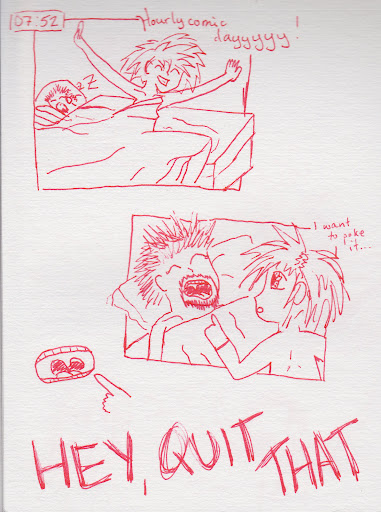
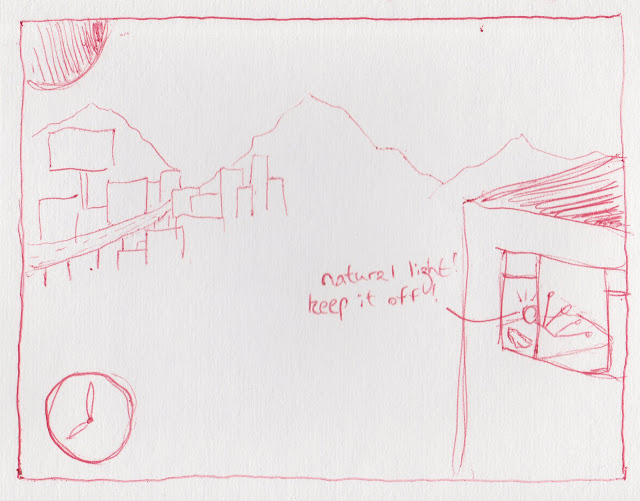
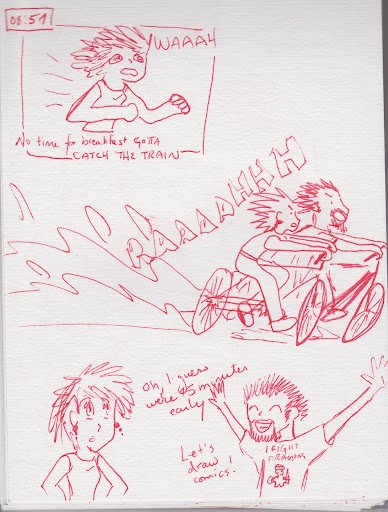
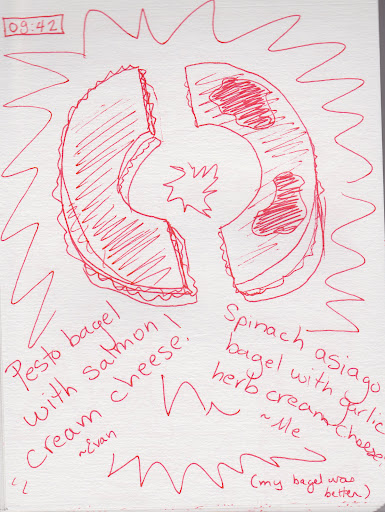
hourly comic day
These penned images
Speak for themselves, so look!
Look upon them now!
Look, I don't feel like writing a haiku.
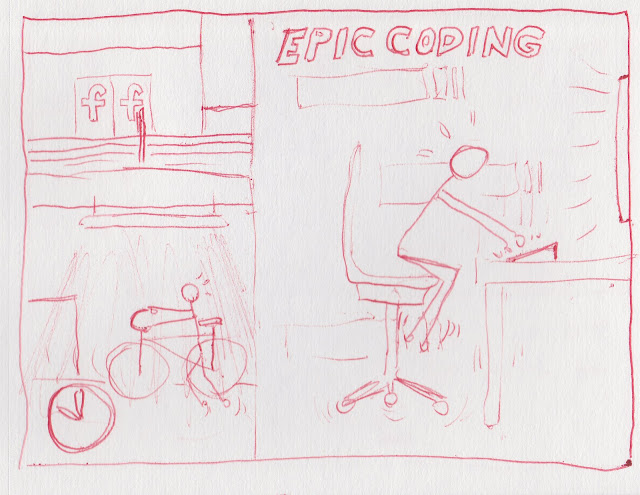
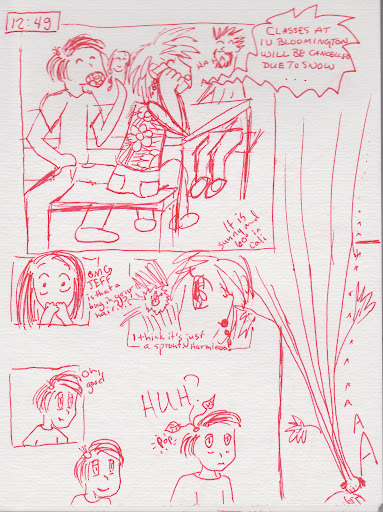
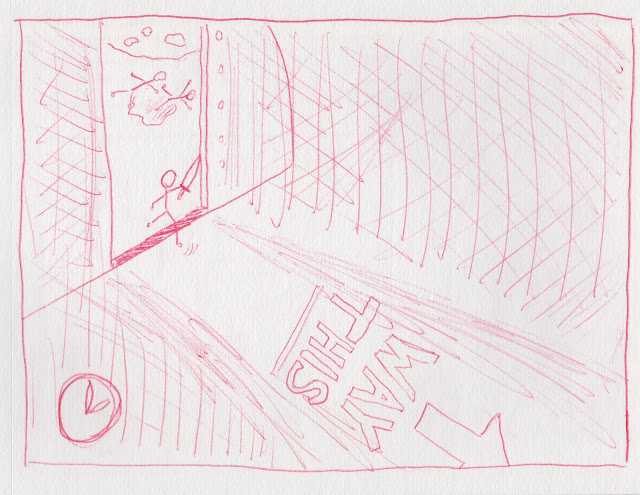
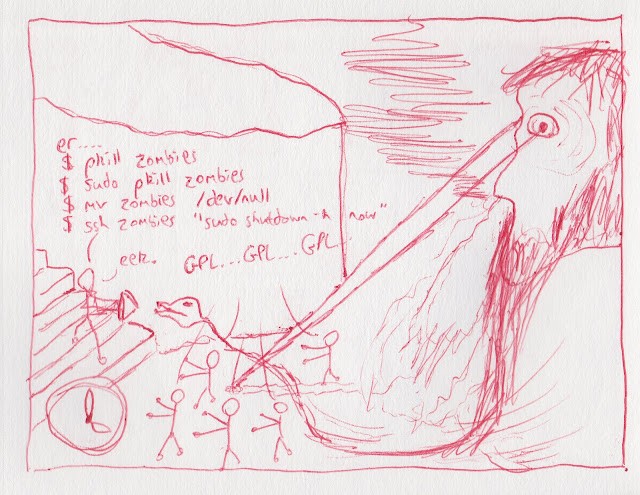
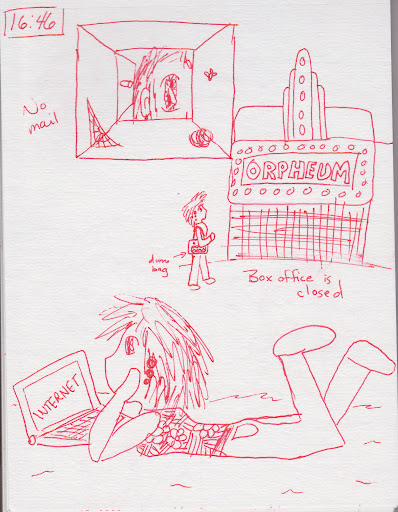
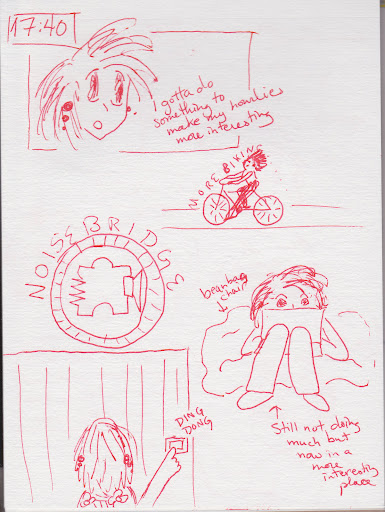
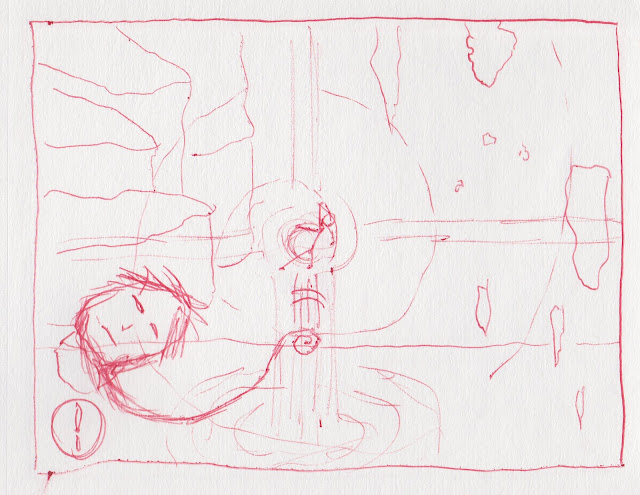
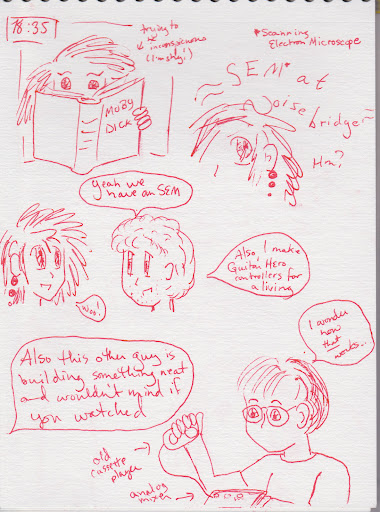
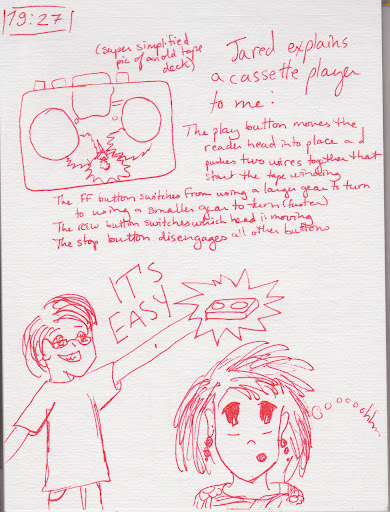
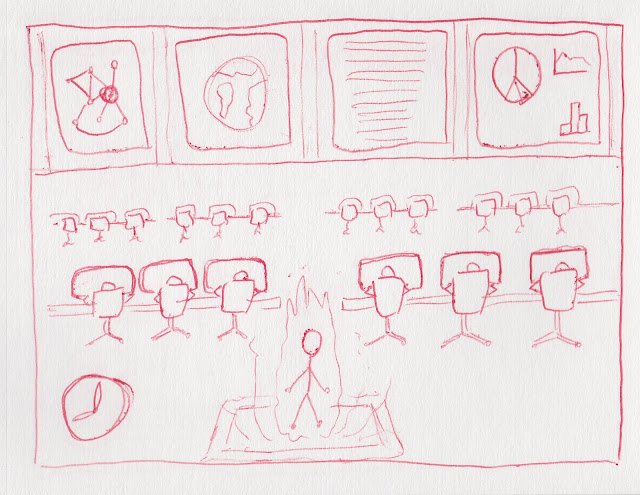
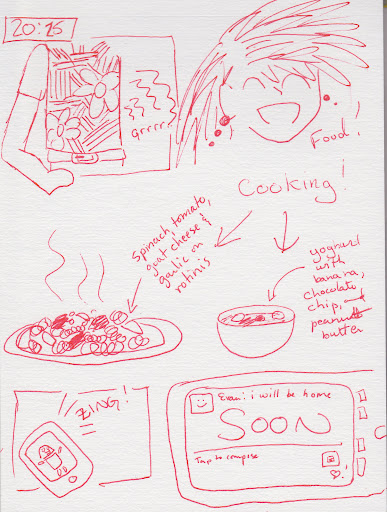
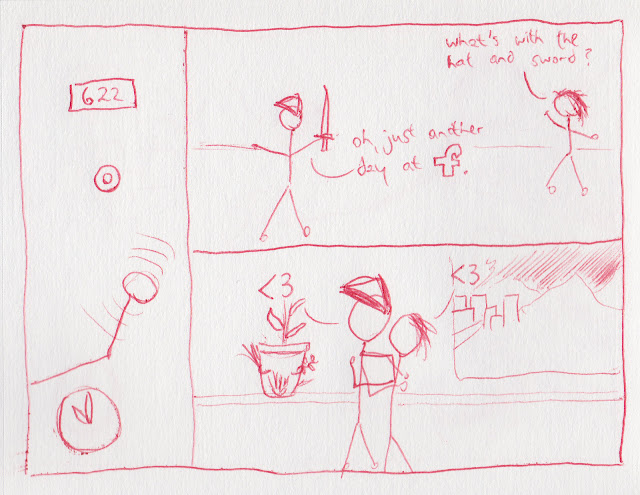
Today was the first day of thing-a-day! We started off the month with the lovely Hourly Comic Day that we've mentioned before. All of our scanned comics can be seen as a nice collection at http://picasaweb.google.com/biketotheearth/Hourlies#. Otherwise, you can just look at them spamming the bottom of this post.
It was a neat thing to do hourly comic day; it meant taking a few minutes out of each hour to both relax and to reflect on what was happening. It's something that people don't necessarily do that often.
Plus, I like drawing. :D
Without further ado, Fearless Tost's hourly comics:
![]() | ![]() |
![]() | ![]() |
![]() | ![]() |
![]() | ![]() |
![]() | ![]() |
![]() | ![]() |
![]() | ![]() |
![]() | ![]() |
![]() | ![]() |
![]() | ![]() |
![]() | ![]() |
![]() | ![]() |
![]() | ![]() |
![]() | ![]() |
![]() | ![]() |
![]() | ![]() |
![]() | ![]() |
![]() | ![]() |
25.1.11
diary of an aspiring grad
Nerves tight, mind singing,
Phone perched atop nearby ledge.
But when will it ring?
On my plate today was a phone interview with UC Berkeley's EECS Department, that being one of the two schools I applied to for graduate school in the fall. The other one was MIT's Media Lab.
With respect to the phone interview, it was puzzling. I frantically asked many people I knew what I might expect from such a thing, and everyone I asked responded that they had never heard of a CS department doing phone interviews. Hm.
For the record, it was what one might expect from such a thing: it was a few pokes into what makes me tick. The only three questions were "why CS?", "which school would you go to if you had your choice?", and "how do you plan to pick a professor as advisor?". The complications of the interview were largely related to the tenuous phone connection that we had... the caller was on Skype, and it simply didn't play well with my phone for some reason. Although I genuinely couldn't make out more than 20% of the actual words he said, it was still easy enough to understand the questions. There's a psychology experiment in there somewhere.
Here are my thoughts on the schools/grad school in general/the phone interview questions:
- They are both doing cool things. I think some of MIT's projects (like Color Code) are a little too... ah... out there for me. Then again, they do have loads of really fascinating augmented reality and intelligent surface projects. Berkeley's department is merged computer science and electrical engineering, which leads to a lot of awesome robotics-type projects. I am pretty excited about robotics. Both schools are strong on interdisciplinary projects like bio-inspired materials and robots.
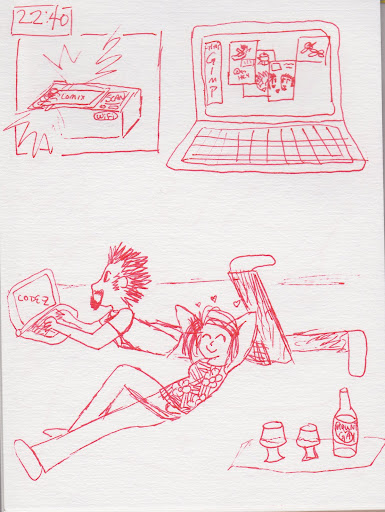
- I like being near Evan. I like the Bay Area. Berkeley is here. Points.
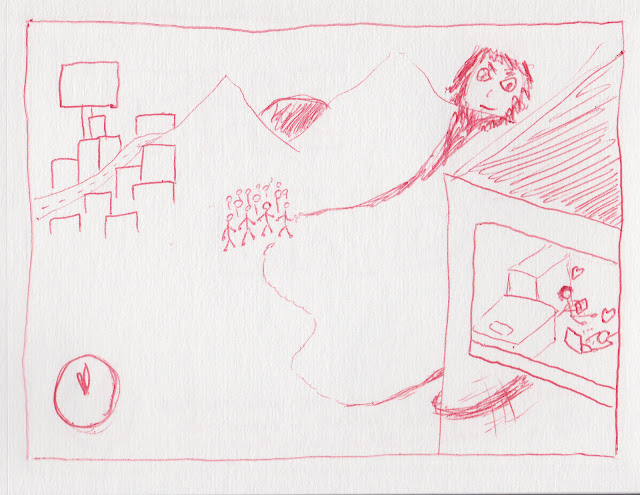

- Stanford is also around here, but they are a farm for startups. I don't want to start/join a startup. I want to get a PhD. That's, er, why I applied to get a PhD.
- I don't want to find myself wasting away for 5-7 years in a school I'm not super excited about. If I have to wait another year and explore my interests further, so be it.
- How to pick an advisor? To be honest, I hate the system for choosing them. I had to fill out the names of people I would be interested in working with when I did the applications, and it was kind of silly. An advisor isn't just someone you have to know, it's someone you have to spend LOADS OF TIME WITH. There's no way to tell if you'll like a prof as a person until, um, you meet him or her in person. I mentioned this in the phone interview, and the interviewer was amused and echoed that he thought it was silly also.
- I am still scattered on exactly what I would like to do for a thesis. I don't even comprehend precisely how large a project needs to be to be "thesis worthy". It will be something related to robots, technology and society, or green engineering (or all three).
I suppose there are probably other things I want to say, but the State of the Union is about to start over at whitehouse.gov! Watch it!
circuitous hackery
After about a month of talking about it, we finally took the plunge: this Monday, at roughly 2000, we crashed through the doors of Noisebridge, hung our bikes on their wall-mounted rack, and set to building our very own Volksduino as part of the regular Circuit Hacking Mondays (photos start here; you can see us hard at work with our soldering irons.)
And yes - they both work! Milo (the guy who was helping everyone out) popped in his homebrew serial-to-USB cables and test-drove them from the Arduino IDE, including a quick test of the shield connections using the LoL (lots of LEDs) shield.
So what are we going to do with our newfound 2KB-of-flash-ROM power? Well...we've committed ourselves to Thing-A-Day, and we have at least one project in the pipeline that could make use of an Arduino (or clone thereof) with wireless transmission capabilities. We're planning to head over to Noisebridge as often as possible to pick up the technical knowhow for such a project, so - if you're in the area, join us!
23.1.11
Subscribe to:
Comments (Atom)